Mark Twain once called it "the most delicious fruit known to men," and if you've ever spooned into a ripe cherimoya (pronounced cheh-ree-MOH-yah), you'll understand why. Botanically it's Annona cherimola — a cousin of the guanábana, and known in English as the custard apple. On the outside it's an unassuming green, scaly heart; on the inside it's a scoop of sweet, creamy white custard that tastes like a blend of banana, pineapple, and vanilla. As your Jaco Beach Chef, I love introducing guests to fruits like this, so here's the story of cherimoya, from www.jacobeachchef.com.
So, what exactly is cherimoya?
Cherimoya is a medium-sized fruit, usually heart- or cone-shaped, with a thin green skin patterned in overlapping scales or thumbprint-like markings. Cut it open and you'll find soft, snow-white flesh with a custard texture, studded with large, glossy black seeds (which you don't eat — spit them out like watermelon seeds). The flavor is where it wins people over: sweet and tropical, somewhere between banana, pineapple, papaya, and vanilla cream. It's best eaten perfectly ripe, when it gives slightly to a gentle squeeze, like a ripe avocado.
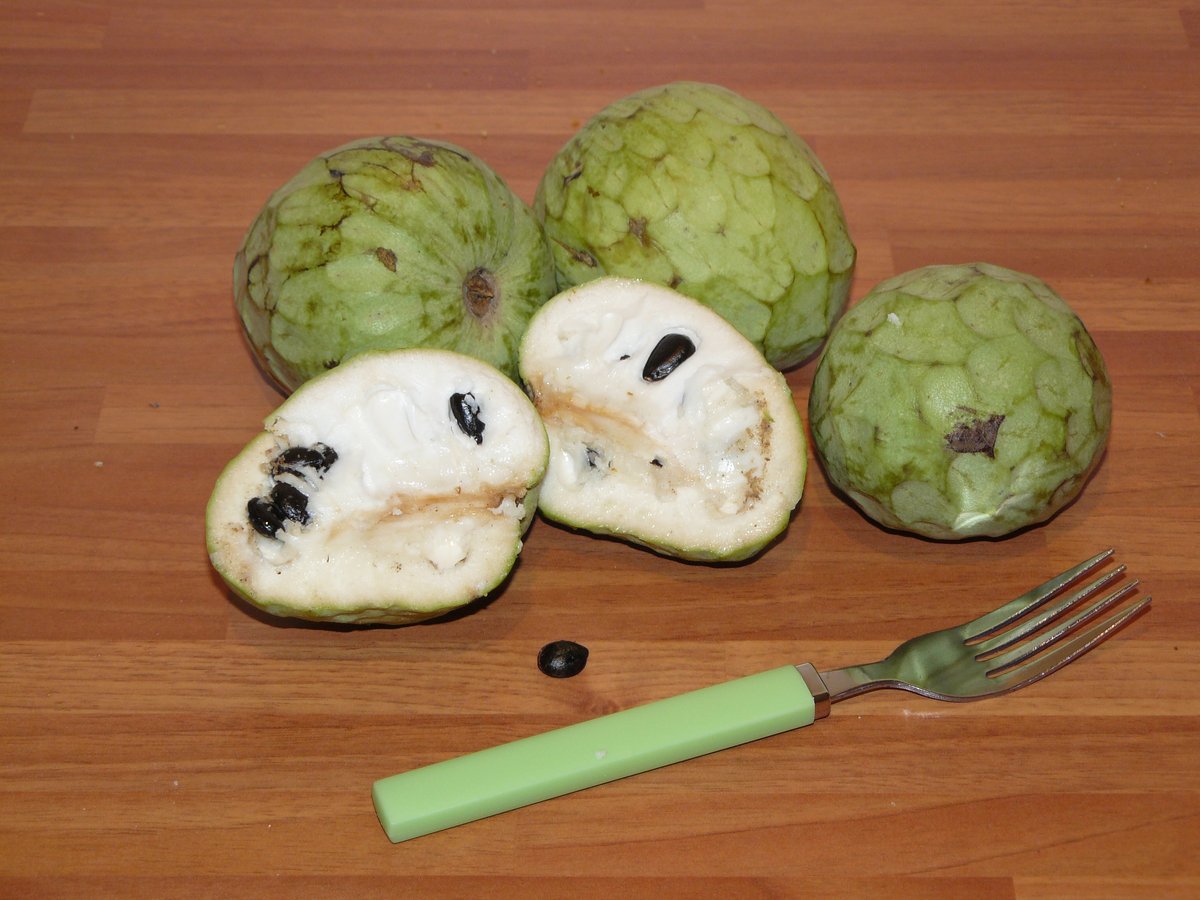
How ticos eat cherimoya
The simplest way is the best: cut it in half and scoop the flesh straight out with a spoon, ideally chilled — it's like eating natural ice cream. Because it's so smooth and sweet, cherimoya also makes an incredible batido (fruit smoothie) blended with a little milk or water, and it's wonderful in fruit salads, sorbets, and desserts. Just remember it doesn't like the cold for long-term storage — ripen it on the counter, then chill it a couple of hours before eating.
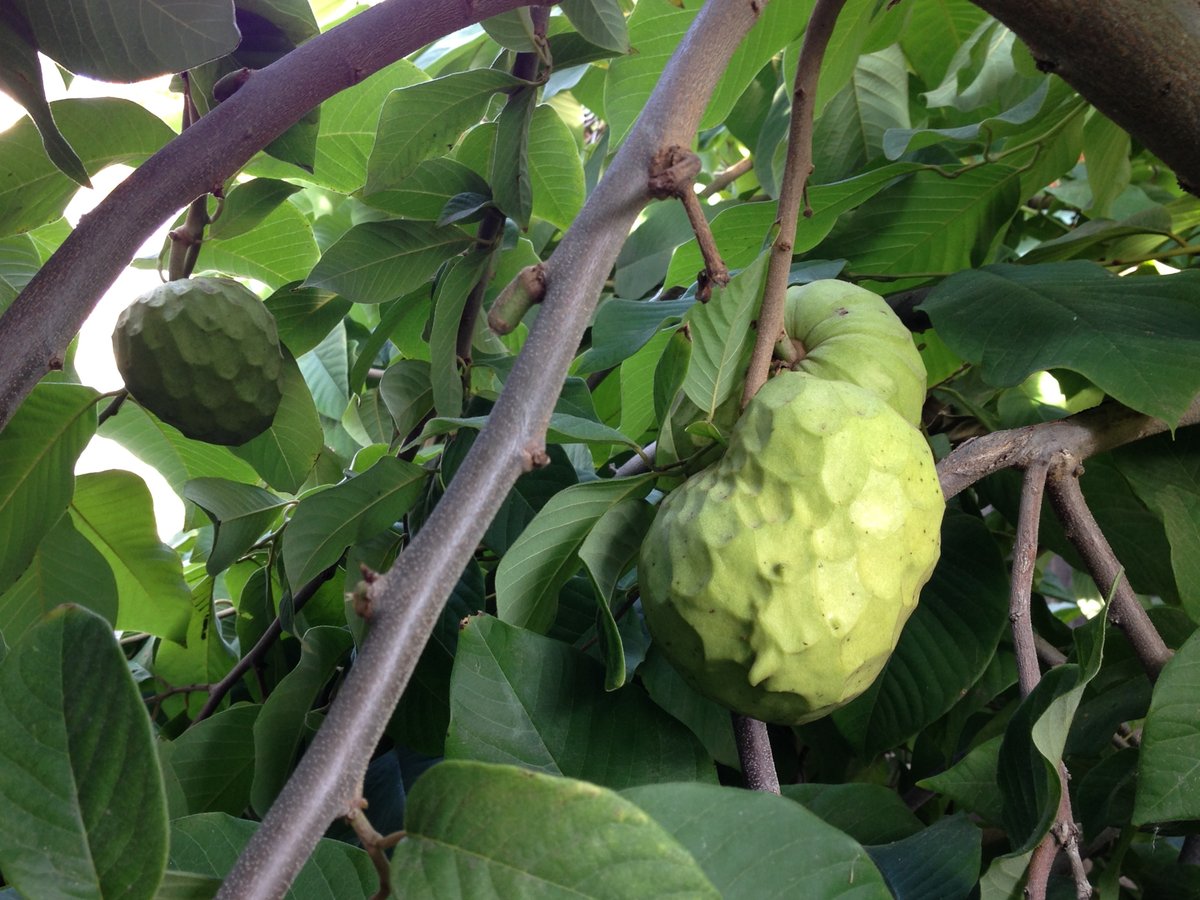
Health benefits of cherimoya
Behind that dessert-like sweetness is a genuinely nutritious fruit:
- High in vitamin C — supporting your immune system and skin.
- Good source of vitamin B6 — which helps mood and brain function.
- Rich in fiber — supports healthy digestion and keeps you full.
- Contains potassium & magnesium — minerals that support heart and muscle function.
- Packed with antioxidants — plant compounds that help the body fight free radicals.
A quick note: these are general nutrition facts, shared for interest — not medical advice. (And a heads-up: the seeds and bark aren't edible, so enjoy just the flesh.)
Where to try cherimoya in Jacó
Cherimoya thrives in Costa Rica's cooler highlands, so you'll most often find it at the weekly feria (farmers' market) and in supermarkets, especially in season. Pick one that's green and gives slightly to the touch — if it's rock-hard, let it ripen on the counter for a few days. It's a perfect sweet treat to enjoy after a morning of tours and adventures or a day at the beach.
Fresh local flavor, handled by your chef
When I cook for your group as your private chef in Jaco, I love finishing a meal with the tropical fruits ticos treasure — a chilled cherimoya, a guanábana batido, or fresh fruit woven right into tropical breakfasts and desserts.
Planning a bachelor party, wedding, or family getaway to Jacó? Message me on WhatsApp or visit www.jacobeachchef.com and I'll handle the food while you soak up everything the Pura Vida coast has to offer.