Costa Rica is one of the most beautiful places in the world to get married — and one of the more manageable countries in Central America for a legally valid foreign ceremony. That said, the paperwork has real requirements, a real timeline, and real consequences if you start too late. This guide walks through every legal requirement for getting married in Costa Rica as a foreign national, so you can decide whether to pursue the legal route or go with the symbolic ceremony that most Jacó Beach couples ultimately choose.
The team at www.jacobeachchef.com coordinates destination weddings at the private beachfront resort in Jacó Beach year-round, and we can connect you with bilingual notarios and wedding coordinators who handle the legal process regularly. Whether you go legal or symbolic, we've seen both routes work beautifully.
The Six Legal Requirements
To legally marry in Costa Rica as a foreign national, you must satisfy all six of the following requirements:
- 1. Valid passports for both partners. Both individuals must present valid, unexpired passports at the time of the ceremony. Bring originals — photocopies are not accepted for this purpose.
- 2. Proof of single status. Each partner must demonstrate they are legally free to marry. This typically means a birth certificate from your home country (which implicitly shows no marital history) or a specific letter from your country's civil registry confirming single status. The document must then be apostilled — internationally certified — by the relevant authority in your home country.
- 3. Apostille certification. All foreign documents must carry an apostille, which is the internationally recognized certification that verifies a document's authenticity for use in another country. In the United States, apostilles are issued by the Secretary of State's office in the state where the document originated. Processing times vary widely — from a few days to several weeks — and apostilles themselves must then be sent to a certified Spanish translator in Costa Rica.
- 4. Certified Spanish translations. All foreign-language documents — passports, proof of single status, apostilles — must be translated into Spanish by a certified official translator recognized by Costa Rica's Registro Civil. These translations must be completed in Costa Rica and cannot be done abroad.
- 5. Two adult witnesses. The ceremony requires two adult witnesses (18 years or older) to be physically present and to sign the marriage certificate. These can be guests at your wedding.
- 6. A licensed Costa Rican notario público. The ceremony must be officiated by a licensed Costa Rican notary public — a notario público — who has the legal authority to register the marriage with the Registro Civil. This is not the same as a wedding officiant in other countries; the notario is a licensed legal officer.
The Timeline: Why You Must Start Early
The apostille process is the step that most couples underestimate. In the United States alone, apostille processing through a Secretary of State's office can take anywhere from a few days (for states with expedited options) to several weeks during peak demand periods. Add shipping time to Costa Rica, the certified Spanish translation process, and any back-and-forth if documents need corrections — and you're looking at a realistic lead time of two to four months minimum for the document preparation phase alone.
This means if your Jacó Beach wedding is in December, you should be starting the apostille and translation process no later than August — ideally earlier. Couples who leave this to the last two months consistently run into problems. The document process is not something you can rush once it's in motion.
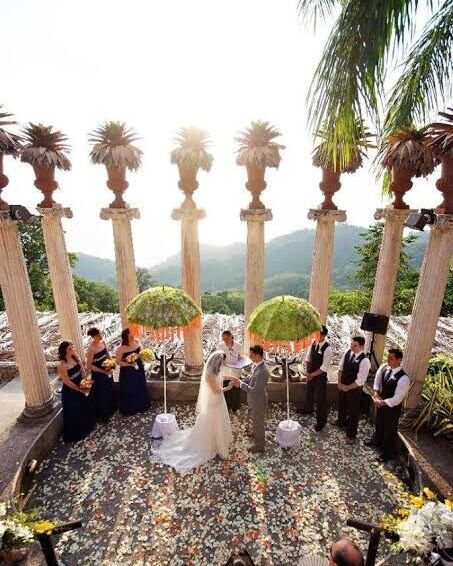
After the Ceremony: Registration with the Registro Civil
Once the ceremony is complete, the notario público files the marriage record with Costa Rica's Registro Civil — the civil registry. This creates an official Costa Rican marriage certificate. You can then obtain a certified copy of this certificate, have it translated and apostilled, and use it to update your marital status records in your home country.
Most home countries (United States, Canada, United Kingdom, Australia, Germany, and others) recognize Costa Rican marriages without any additional steps beyond presenting the apostilled, translated certificate.
Why Most Jacó Beach Couples Go Symbolic
Given the complexity of the legal route, it's worth understanding why the majority of foreign couples who celebrate their wedding at the private resort at Jacó Beach choose the symbolic ceremony instead.
A symbolic ceremony involves zero Costa Rican paperwork. The couple handles their legal marriage at home — a simple courthouse appointment before or after the trip — and the Jacó Beach ceremony is purely the celebration. This means complete freedom in ceremony design: your own vows, your own structure, a bilingual officiant of your choosing, and no bureaucratic timeline dictating your planning.
The experience at the venue is identical either way. The private beachfront resort, the Pacific sunset, the catered dinner, 30 bedrooms all to your group — none of that changes based on whether a notario or a symbolic officiant performs the ceremony. What changes is the paperwork burden on your side during planning.
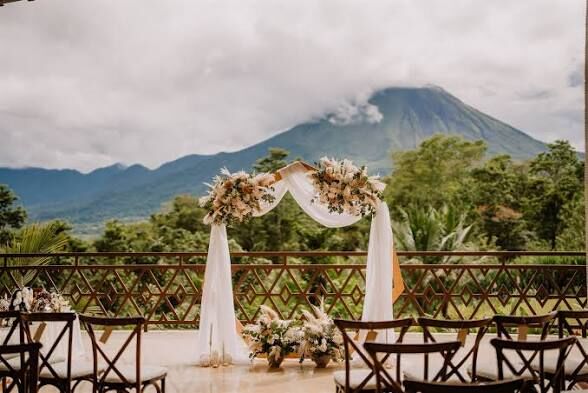
Working With a Bilingual Notario in Jacó
If you decide the legal ceremony is the right path, www.jacobeachchef.com can connect you with experienced bilingual notarios who work with foreign couples at the Jacó Beach resort regularly. These are professionals who understand both the legal requirements and the ceremonial side of a destination wedding — they're not just processing paperwork, they're part of your ceremony.
The key is starting that conversation early. Reach out to us as soon as you have a date in mind, and we'll introduce you to the right people so your document timeline has maximum runway. Contact us to start planning — the earlier we talk, the smoother the whole process.