If you spend any time in Costa Rica, you will eat patacones. They'll arrive alongside your pargo frito, they'll appear next to your ceviche, they'll show up at breakfast, lunch, and dinner. They are twice-fried green plantain discs — thick, crispy, golden, salted, and utterly addictive — and they are one of the great everyday foods of Costa Rica. As your private chef in Jacó at Jaco Beach Chef, I make fresh patacones for virtually every meal I cook at the villa. Here's the full story of what they are, how they're made, and why you'll be obsessed with them, from www.jacobeachchef.com.
What are patacones exactly?
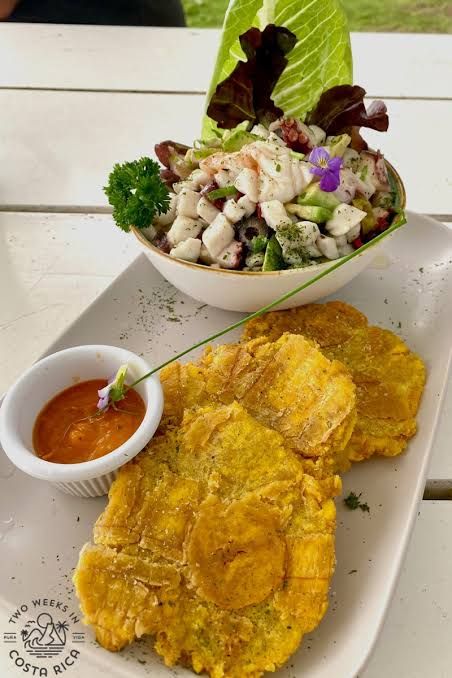
Patacones are made from green (unripe) plantains — the starchy, savory cousin of the banana. Unlike ripe yellow or black plantains, which are soft and sweet, green plantains are firm and almost potato-like in flavor and texture. That starchiness is exactly what makes patacones work: when you fry a green plantain, smash it flat, and fry it again, the starch transforms into a beautifully crispy, slightly chewy disc with a golden exterior and a soft interior — like the world's best thick tortilla chip.
In other parts of Latin America and the Caribbean the same dish goes by different names — tostones in Puerto Rico and the Dominican Republic, plátanos fritos elsewhere — but in Costa Rica, patacones is the word, and you'll hear it everywhere from Jacó to Limón to Guanacaste.
How are patacones made?
The process is simple but the double-fry is what makes all the difference. Here's the traditional method:
- Step 1 — Peel and slice: Cut a green plantain into rounds about an inch thick. The thick green skin peels away cleanly with a knife.
- Step 2 — First fry: Fry the rounds in hot oil for about 3–4 minutes, just until they soften and start to turn golden. They're not crispy yet — that comes next.
- Step 3 — Smash: Remove the rounds from the oil and flatten them with a heavy plate, a glass bottle, or a dedicated tostonera (a wooden patacone press). Flatten each round to about half its original thickness.
- Step 4 — Second fry: Return the smashed discs to the hot oil and fry again until deeply golden and crispy on both sides. This second fry is what creates the signature crunch.
- Step 5 — Season: Drain and immediately hit them with salt while they're still hot. Some cooks add garlic powder or a squeeze of lime.
The whole process takes about fifteen minutes, and the difference between a fresh hot patacón right out of the oil and one that's been sitting for an hour is enormous — so I always make them to order at the villa.
What do patacones go with?
The honest answer is: everything. Patacones are the universal side dish of Costa Rican cooking. Some of the most common pairings you'll find in Jacó:
- Pargo frito (whole fried snapper) — the classic combination; the crispy plantains scoop up the fish perfectly
- Ceviche — fresh Pacific ceviche piled on top of a patacón is a staple bar snack
- Gallo pinto — served alongside the national rice-and-beans breakfast
- Guacamole or sour cream — as a standalone snack with a cold Imperial beer
- Black bean dip — spread with refried beans and a sprinkle of cheese for a quick appetizer
- Chifrijo — patacones on the side of a chifrijo bowl complete the full Costa Rican boca experience
Patacones vs. maduros — what's the difference?
The other famous plantain preparation in Costa Rica is plátanos maduros — ripe, sweet, pan-fried yellow plantains. Where patacones are savory, starchy, and crispy, maduros are caramelized, tender, and sweet. Both are staples, both appear on virtually every Costa Rican menu, and they serve completely different roles. Patacones go with savory mains; maduros are a sweet counterpoint, often served alongside rice, beans, and grilled meat. When you see both on a plate, that's a proper casado — the full traditional Costa Rican set meal.
Are patacones healthy?
Green plantains themselves are genuinely nutritious — high in complex carbohydrates, potassium, vitamin B6, and dietary fiber. The frying adds fat, obviously, but patacones are made without batter or heavy coatings, so calorie-for-calorie they're far lighter than most fried snacks. A fresh patacón made with good oil and eaten hot is a very different thing from packaged chips — it's whole food, minimally processed, made from scratch. General nutrition note — not medical advice.
Fresh patacones at your villa in Jacó
When I cook for your group as your private chef in Jacó, patacones are almost always part of the spread — made fresh, fried to order, seasoned right. They're the kind of thing that disappears instantly at a big table and always gets requests for more. Head over to the full menu at Jaco Beach Chef or book directly on WhatsApp to talk about your group's dates and preferences.
Everything at www.jacobeachchef.com is made with fresh local ingredients — that's the difference between a real private chef experience in Jacó, Costa Rica, and a catered tray of generic food.